Nature’s Nutrition Beet Root Review: Benefits & Side Effects
Does Nature’s Nutrition Beet Root fit your goals? Review the current formula, potential benefits, side effects and daily use, with a clearly marked alternative.
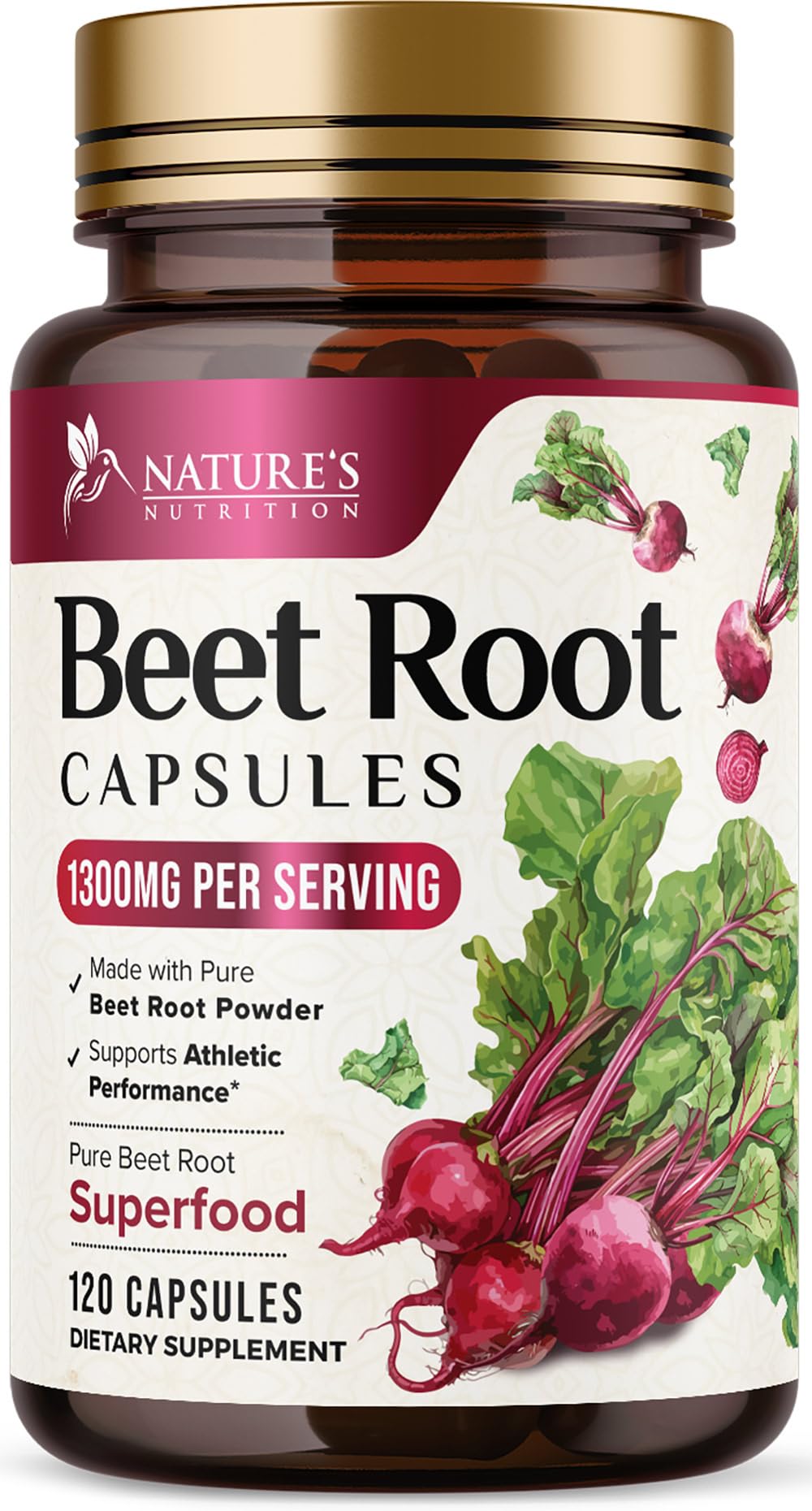
Nature's Nutrition Beet Root 1300 mg is easiest to understand as a convenience product. It puts beetroot powder in vegetable capsules for people who prefer not to prepare a drink. The reviewed version contains 120 capsules, and its appeal comes from a relatively short active-ingredient panel rather than a large collection of botanicals. That can be a practical strength for someone who already uses other supplements and wants to know exactly what another product adds.
Published-label and research assessment. We checked current catalog information, available Supplement Facts images and linked scientific sources. No personal use, independent laboratory testing or head-to-head trial is claimed. Two promotional recommendations concern products or services sold by the owner of this publication.
Is Nature's Nutrition Beet Root 1300 mg — 120 Veggie Capsules the right fit for your goal?
Nature's Nutrition Beet Root 1300 mg — 120 Veggie Capsules is worth evaluating for its actual formula and current label, rather than its reputation alone. This review looks at a practical men’s wellness comparison: what is documented, where the evidence is limited, and which practical questions matter before a purchase. The aim is a useful decision, not a score assembled from promotional claims.
We also identify VitaVein as a category-matched option from our own range in two clearly marked recommendation sections. That commercial relationship does not change the evidence standard applied to Nature's Nutrition Beet Root 1300 mg — 120 Veggie Capsules. Genuine strengths are acknowledged, unresolved details stay unresolved, and no hands-on testing or clinical superiority is invented.
A simple formula with a straightforward purpose
Nature's Nutrition Beet Root 1300 mg is easiest to understand as a convenience product. It puts beetroot powder in vegetable capsules for people who prefer not to prepare a drink. The reviewed version contains 120 capsules, and its appeal comes from a relatively short active-ingredient panel rather than a large collection of botanicals. That can be a practical strength for someone who already uses other supplements and wants to know exactly what another product adds.
It belongs in a discussion of heart health and circulation because that is how the brand positions the beet formula and because beetroot has relevant ingredient research. That relationship does not turn the bottle into a proven treatment for hypertension or a medicine for erectile dysfunction. The most useful opening verdict is therefore specific: this is an accessible capsule format with transparent plant-powder quantity, while its nitrate exposure and finished-product cardiovascular outcomes remain separate questions the label does not answer.
Read the serving before comparing the strength
The prominent 1,300 mg amount applies to a two-capsule serving. It is not the amount in each capsule. A 120-count bottle therefore contains sixty labeled servings. This matters when comparing apparent strength, capsule count and cost with another beet product. Calling it a 120-day supply without checking the serving directions would double its practical value on paper. The serving arithmetic matters more than the large bottle count when estimating routine duration.
The active ingredient is organic beetroot powder, identified as Beta vulgaris root. The other ingredients form the capsule and support manufacturing; they should not be described as additional circulation actives. The reviewed label includes a hypromellose vegetable capsule along with common excipients. Someone choosing this product for a short panel can reasonably appreciate that simplicity. However, a short panel and a clear powder weight still do not establish a standardized concentration of the particular compounds used in clinical research.
Why the nitrate question stays important
The research case for beetroot frequently concerns dietary nitrate and its role in nitric-oxide physiology. Clinical studies often use juice or another intervention with a specified nitrate exposure. Powder mass is a different unit. It is not scientifically sound to convert 1,300 mg of unspecified beetroot powder into a presumed nitrate amount and then claim the capsules match a trial. The inspected label does not provide the information needed for that calculation.
That missing number is a limit on interpretation, not proof that a capsule cannot have a physiological effect. The fair question is whether the manufacturer can provide relevant standardization or product testing that narrows the uncertainty. Without that information, ingredient research cannot establish a guaranteed blood-pressure result from these capsules. Describing a product as useful for a capsule-based wellness routine is a narrower claim than saying the finished bottle has been clinically demonstrated to lower cardiovascular risk. The available evidence supports different levels of confidence for those statements.
Who might prefer the capsule design
The vegetable capsule is one of the product's clearest differentiators. Readers avoiding gelatin have a concrete reason to compare it with gelatin-based competitors. People who dislike the taste of beet juice may also prefer the design, although no tasting or swallowing test was performed here. There is no drink to prepare, while swallowing comfort and aftertaste were not personally tested here.
Convenience should be considered alongside capsule burden. Two capsules may fit easily into one person's routine and feel excessive to someone who already takes several medications. A powder allows a different ritual but requires measuring and mixing. Neither approach is automatically more effective. The useful comparison is about how the product fits the reader's day, dietary preferences and ability to follow the current directions consistently. Those practical advantages are worth discussing on their own rather than dressing them up as evidence of stronger absorption or faster results.
Match the product to the problem you actually want to solve
Men’s wellness advertising often bundles several different goals together: more desire, firmer erections, better training, thicker hair and more energy. It is easy to see why that sounds appealing. It is also easy to buy the wrong kind of product when those goals blur together. Decide which one matters most before comparing bottles. A supplement sold for general support should be evaluated within that role, rather than treated as an answer to every change in sexual function, appearance or motivation.
Nature's Nutrition Beet Root 1300 mg — 120 Veggie Capsules belongs in that more specific conversation. Its current formula and evidence matter more than a broad masculine image. Persistent symptoms also deserve a different kind of attention from ordinary shopping preferences. A clinician can investigate causes and discuss treatments where appropriate. Choosing professional assessment does not mean every symptom has a serious cause; it means a supplement purchase should not become the only response to a problem that continues or affects your quality of life.
Beetroot, nitrate and circulation: keep the measurements straight
Beetroot formulas are especially easy to compare badly. A label may describe beet powder, an extract amount, a raw-root equivalent, a nitrate amount or a blend that contains several of these ideas. Those figures answer different questions. Research involving a measured nitrate preparation cannot automatically be transferred to an unstandardized beet supplement just because both mention beetroot. Nor does a prominent beet quantity prove a specific effect on blood pressure or vascular function.
Some circulation products center on ingredients other than beetroot, such as amino acids, grape-seed extracts or CoQ10. Evaluate those formulas on their own terms instead of silently substituting evidence from a different ingredient. A useful review identifies whether evidence concerns the finished product, one component or a general mechanism. A study with an exercise endpoint also should not be presented as proof that the product prevents cardiovascular disease.
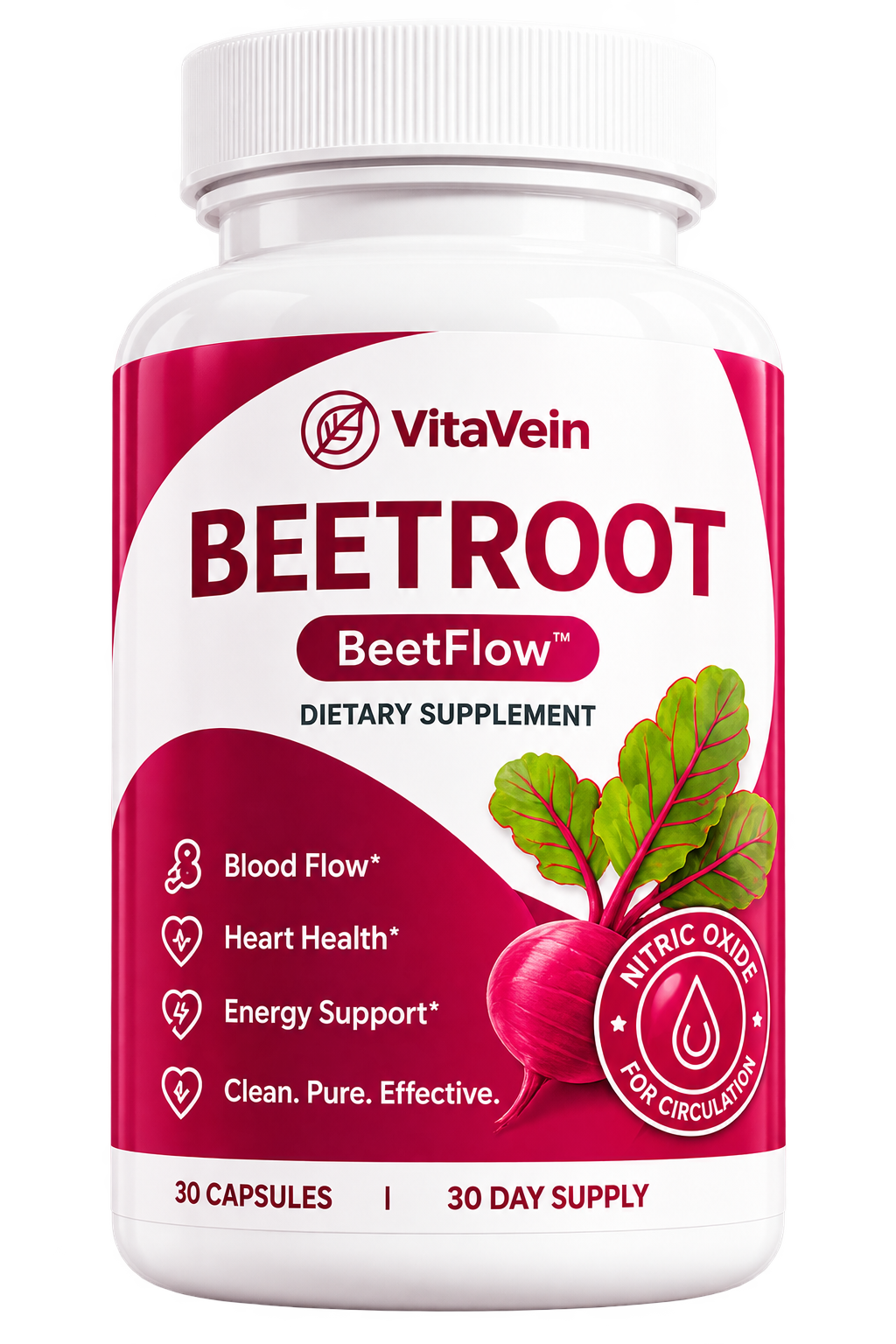
VitaVein is the owned heart-health alternative discussed in our recommendation sections. Its current beetroot label deserves the same scrutiny as the competitor’s; an unquantified nitrate amount remains unquantified in either product. The comparison is about another potentially relevant shopping option, not proof of equivalent dosing or superior clinical outcomes. Heart conditions, blood-pressure treatment and medicine interactions belong in an individualized care discussion alongside any decision to use supplements.
Quality language needs the right interpretation
The brand describes the product as vegan, non-GMO and gluten-free and uses testing and manufacturing language in its official materials. Those statements can be relevant to dietary needs and manufacturing expectations. They do not, by themselves, establish a specific nitrate concentration or prove cardiovascular efficacy. A current lot-specific report would provide different information from a marketing claim; no independent analysis of a purchased bottle was performed for this assessment. This research did not independently analyze the contents of a purchased bottle.
The same distinction applies to organic plant material. The fact that the active ingredient is labeled organic does not make it a prescription equivalent or demonstrate a stronger effect than a non-organic product. It describes one aspect of the source material. Readers benefit when a review separates identity, purity, ingredient quantity and clinical outcomes into different questions. That approach gives the company credit for useful transparency without granting every attractive badge a medical meaning it does not have.
Tolerability and medication context still matter
A beet capsule is a supplement, and it can be relevant to an existing treatment plan even though it comes from a familiar vegetable. People managing blood pressure, kidney conditions or other medical issues should discuss regular supplement use with a clinician or pharmacist. The purpose is to consider the complete routine and whether a new concentrated product creates concerns. That medical-context check applies equally to this product and to a promoted capsule alternative.
The product may also be unsuitable for someone who does not tolerate its ingredients or capsule excipients. Beet pigments can affect urine or stool color, but seeing a color change is not a sign that circulation has improved. Conversely, an absence of a noticeable sensation does not determine clinical effectiveness. Subjective experiences do not provide a diagnostic test of cardiovascular benefit. Persistent symptoms or concerning blood-pressure readings require appropriate assessment rather than a search for a stronger supplement serving.
Make the value comparison about servings and preferences
With sixty labeled servings in the reviewed bottle, the useful comparison is cost per serving under the package directions, not cost per capsule alone. Prices can change, and subscription discounts should be distinguished from one-time purchases. Shipping, renewal conditions and the exact bottle size can affect the final cost. The brand offers other capsule counts, so the price and serving count need to come from the same exact size.
There is also a non-price component of value. A vegan reader may value the capsule material; another reader may place more importance on a quantified nitrate dose. Someone seeking the shortest possible ingredient list may prefer this design over a multi-botanical blood-flow blend, even if the latter uses more dramatic marketing. These are different selection criteria. Those criteria can be ranked by preference, rather than declaring a universal winner from a front-label number or the number of ingredients.
A measured verdict and a relevant alternative
Nature's Nutrition Beet Root 1300 mg presents a clear, relatively simple capsule option with a disclosed serving size and vegetable capsule. Those are real strengths. Its principal limitation for evidence-focused shoppers is the lack of a stated nitrate dose, together with the absence of a verified finished-capsule outcome trial in this research. It can be discussed as a convenient beetroot supplement without promising reliable blood-pressure changes or implying that it replaces a heart-health treatment plan.
VitaVein is a category-matched promotional option for readers comparing beetroot capsule routines. Inspect the current VitaVein label, capsule details and purchase terms when comparing that alternative. It should not assume that the two products provide equivalent nitrate exposure or that one has demonstrated better clinical outcomes. If a reader's priority is capsule format and heart-health positioning, the comparison is relevant. If the priority is reproducing a particular research dose, both products need to be assessed on actual nitrate information rather than the total weight of beet material alone.
Make the routine realistic before you make it expensive
A daily product has to fit an actual day. Consider the serving count, whether the instructions involve food, how easy it is to remember, and whether the bottle lasts as long as the headline price suggests. Someone who dislikes swallowing capsules may judge a multi-capsule formula very differently from someone who already follows a structured routine. Neither preference establishes effectiveness, but both can determine whether an otherwise reasonable purchase is practical.
Keep expectations specific and avoid changing several supplements at once. When a new product arrives alongside a different diet, harder training, improved sleep and another supplement, it becomes difficult to attribute any change. Be especially careful about interpreting a short burst of enthusiasm as proof of a hormonal or vascular effect. The alternative in our recommendation boxes is another option to assess on the same basis: category fit, current ingredients, tolerability, realistic goals and transparent buying terms.
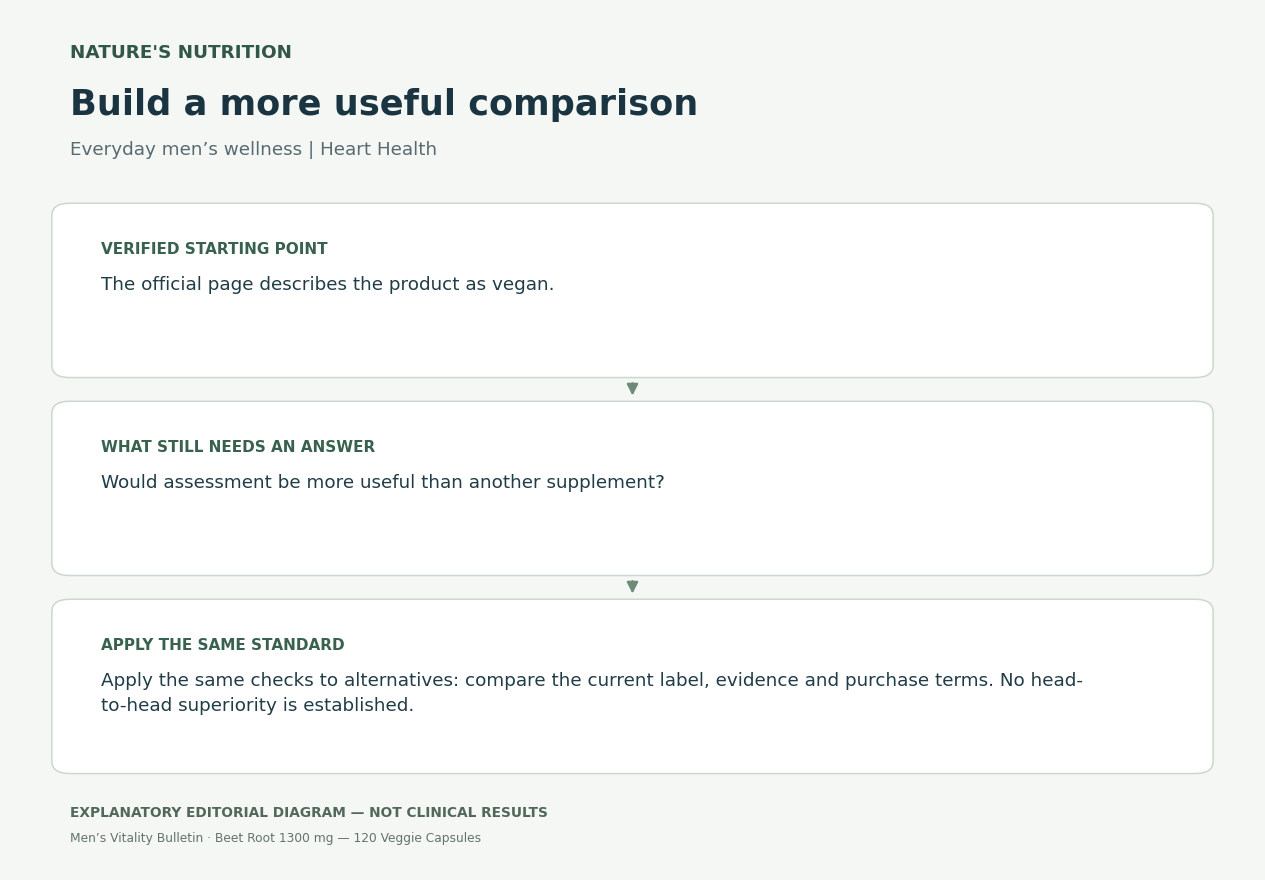
How to compare Nature's Nutrition Beet Root 1300 mg — 120 Veggie Capsules with VitaVein
Start with the actual goal rather than a presumed winner. Nature's Nutrition Beet Root 1300 mg — 120 Veggie Capsules and VitaVein deserve a comparison of their present product or service details, the kind of evidence available and the practical routine involved. Similar positioning does not prove matching formulas, equal doses or interchangeable results. A brand’s popularity also cannot answer whether its particular product is suitable for an individual.
Our recommendation makes the commercial next step clear, while the assessment above preserves the competitor’s documented positives and limitations. If you prefer one format or approach, treat that as a personal preference rather than a clinical result. Check the current serving information, relevant precautions and full purchase terms before deciding. Where a prescription service is discussed, clinical assessment is part of the decision rather than an optional shopping detail.
The verdict: choose for fit, evidence and a realistic routine
The strongest reason to consider Nature's Nutrition Beet Root 1300 mg — 120 Veggie Capsules is the combination of documented features described in this review and a goal that actually matches its category. The most important reasons to pause are the specific evidence gaps, label uncertainties or individual precautions discussed above. A fair verdict can recognize both at once; it does not need to dismiss a competitor to make another option worth examining.
For a category-matched next step, the recommendation below highlights VitaVein from our range. Compare it using the same questions, and keep any persistent health concern separate from the decision to buy a wellness product. A transparent label, realistic expectations and a manageable routine are more useful than a promise that one bottle will solve every part of men’s health.
Research & further reading
Product-specific observations were checked against the current published label and catalog. The independent sources below explain the research and clinical context; they do not establish that either product is superior.
Continue reading
Our VitaVein review · More on heart health · All product reviews