Tribulus for erectile function: two placebo-controlled trials, two different answers
Why Tribulus terrestris trials disagree, how extracts and study design differ, and what the evidence does not establish about testosterone.
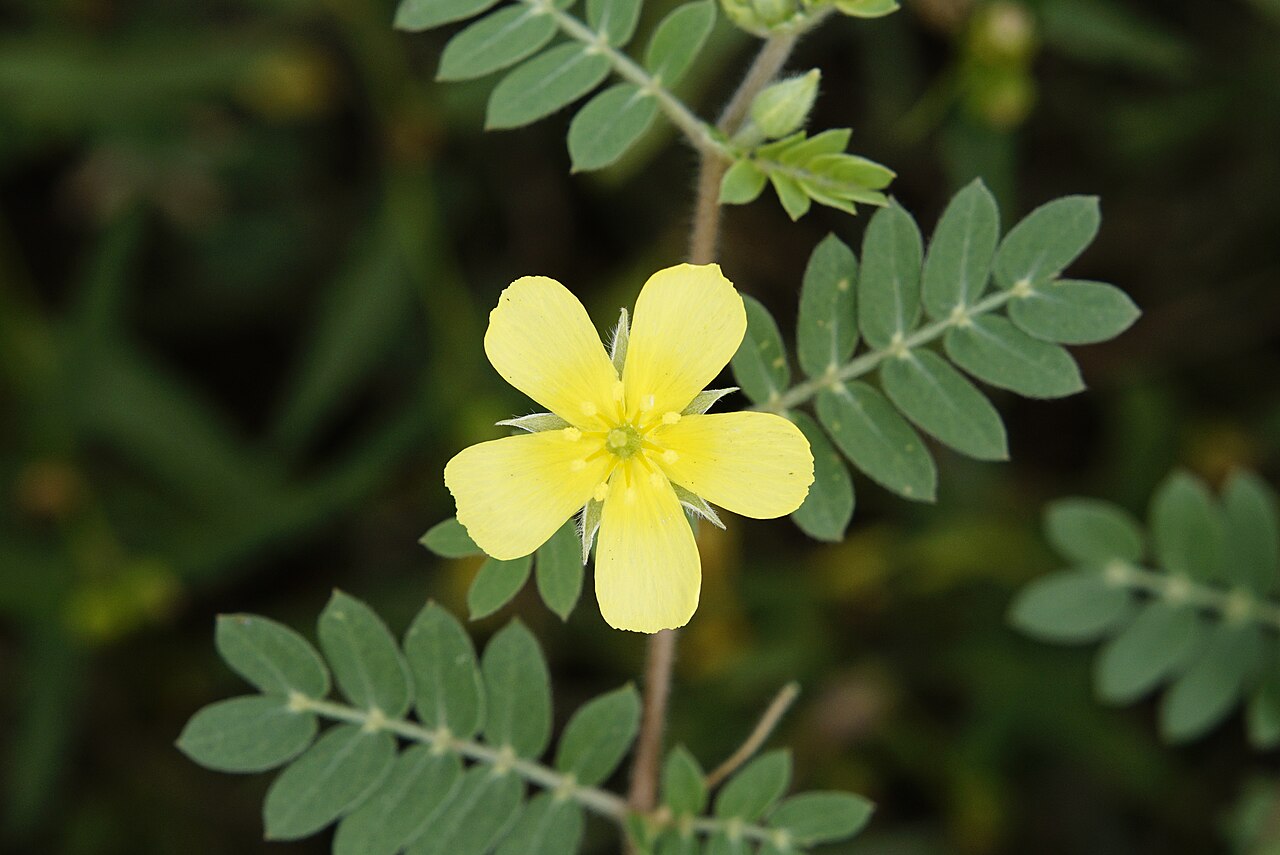
Conflicting Tribulus trials make extract matching and study quality essential. The evidence does not support treating every product as effective or testosterone-boosting.
The label name is only the beginning
Tribulus terrestris is sold for libido, erections, testosterone, and athletic performance. Those are different claims, and products can use different plant parts, extraction ratios, and standardization methods. A trial of one defined extract cannot automatically establish an effect for raw powder or another extract bearing the same botanical name.
Start by identifying the exact outcome. A change in an erectile-function questionnaire is not the same as an increase in testosterone, and neither necessarily establishes improved fertility or exercise performance. Marketing often places these ideas together, but responsible evidence review keeps them separate.
A small 30-day trial found no advantage
A 2014 randomized double-blind placebo-controlled study included 30 men with erectile dysfunction. Participants received 800 milligrams of Tribulus daily or placebo for 30 days. Erectile-function scores improved over time in both groups, but there was no significant difference between Tribulus and placebo. Total testosterone also did not improve relative to placebo.
The study was small and short, which limits certainty. Yet its null result cannot be dismissed merely because another paper is favorable. It directly tested a defined regimen against placebo and found no added benefit during the study period. That is relevant to any confident claim that Tribulus reliably raises testosterone or improves erections.
A larger 12-week trial reported improvement
A 2017 trial randomized 180 men with mild or moderate erectile dysfunction to a standardized Tribulus extract or placebo for 12 weeks. The authors reported a greater improvement in the International Index of Erectile Function with the extract, with a between-group difference of 2.70 points in the intention-to-treat analysis. Several other sexual-function domains also favored the intervention.
This larger, longer trial provides a different signal, but it tested a specific standardized product at a particular regimen. Readers should still ask about clinical importance, replication, sponsorship, and whether the retail label matches the researched extract. A statistically significant average difference does not guarantee that an individual will notice a meaningful change.
Disagreement is information, not an inconvenience
Trials can disagree because of participant selection, baseline severity, dose, extract composition, duration, outcome instruments, adherence, chance, or bias. The correct response is not to select the preferred result and ignore the other. Compare the designs and look for independent replication using the same preparation and prespecified outcomes.
A 2025 European Medicines Agency assessment reviewed Tribulus evidence and concluded that available data were insufficient to establish a European Union herbal monograph. That regulatory assessment is not a claim that every product is ineffective. It is a reminder that scattered studies do not necessarily support a consistent, well-characterized medicinal use.
Do not let the testosterone story outrun the data
Tribulus is frequently marketed as a testosterone booster even when the cited trial measured sexual function. The 2014 study did not find a testosterone benefit, and an erectile-function change would not by itself prove a hormonal mechanism. If testosterone deficiency is a concern, symptoms and properly timed laboratory testing should be interpreted clinically rather than inferred from a supplement response.
Show the complete label to a clinician or pharmacist before use, especially when erectile dysfunction is persistent or medicines and chronic conditions are involved. This guide does not recommend Tribulus. The evidence contains both a negative small trial and a favorable larger trial; the honest conclusion is uncertainty that depends heavily on the exact extract and claim.
A useful product check is deliberately specific
Write down the Latin species name, plant part, extraction ratio, standardization marker, amount per serving, daily servings, and other active ingredients. Then compare each item with the trial. A mismatch does not prove the product fails, but it means the study is indirect evidence rather than a test of what is being sold.
Also check whether the advertised change exceeds the difference between groups, not merely the improvement from baseline. Symptoms often change over time and placebo groups can improve. The controlled comparison is the part designed to estimate the intervention's added effect.
Sources & further reading
This article provides educational information. Ask a qualified clinician or pharmacist about your symptoms, medical conditions, medicines and supplement interactions.