How to count zinc when several supplements share your shelf
A practical guide to zinc label totals, overlapping products, serving sizes, and why an upper limit is not an intake target.
Count zinc across products before adding another supplement. A higher label number does not automatically mean a greater benefit.
Begin with everything you actually use
Zinc can appear in a multivitamin, a standalone mineral product, an immune-support lozenge, or a men's wellness blend. Someone comparing only the newest bottle can miss that the same nutrient is already present elsewhere. The useful question is not simply how much zinc is in one serving, but how all the products used on a typical day fit together.
The NIH Office of Dietary Supplements notes that almost all multivitamin and mineral supplements contain zinc. This makes overlap a practical possibility rather than a rare labeling puzzle. Gather each package, including products used only during travel or seasonal illness, and record what you actually take. A shelf inventory should reflect real use, not an idealized version of the label instructions.
Serving size comes before arithmetic
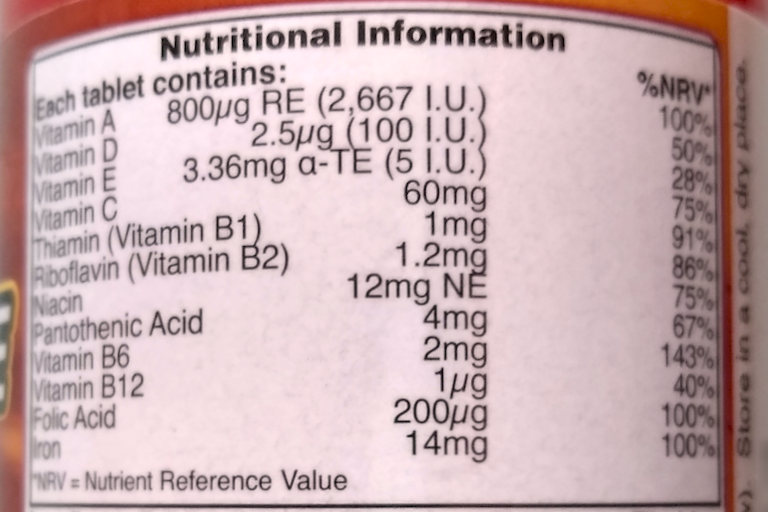
A label may list an amount per two capsules, while a person takes one, or show an amount per lozenge while the package permits repeated servings. Before adding numbers, identify the serving unit. Multiplying the amount per unit by actual use creates a clearer picture than comparing front-label percentages or assuming all products use the same serving definition.
Record the nutrient amount, number of servings used, and frequency. Keep units consistent, and do not confuse the weight of a zinc-containing compound with the amount of elemental zinc identified in the nutrient panel. If the labeling is unclear, ask the manufacturer or a pharmacist to explain it. Unclear information should be marked as uncertain rather than estimated from a promotional headline.
An upper limit is not a goal
NIH lists a tolerable upper intake level of 40 milligrams a day for adults, with lower limits for younger age groups. This figure includes intake from all sources and is not a recommended target for every adult. Medical use under professional supervision can involve different circumstances, so the number should not be used to override individualized advice.
The distinction matters because some shoppers read a maximum as a performance objective. A safety ceiling does not imply that moving closer to it improves immunity, energy, or men's health. Nor does a daily value percentage independently establish that a person needs that amount. Nutrient requirements, diet, health conditions, and the reason for supplementation are separate questions from the highest amount considered unlikely to cause harm for most people.

Excess intake can create another problem
NIH describes how taking too much zinc for a long time can lower copper levels and affect other aspects of health. Its copper resource also explains the relationship between high zinc intake and impaired copper absorption. This is one reason nutrient decisions should consider the whole picture rather than assuming that adding more of an essential mineral can only be helpful.
Do not respond by independently adding another mineral to compensate for an uncertain excess. Instead, bring the full inventory to a qualified professional and ask whether any products are redundant or inappropriate. A stack of corrective supplements can make the original decision harder to understand. The goal is an accurate assessment of the need, not an expanding collection assembled to balance other bottles.
Make the inventory useful at an appointment
A simple written list can show product name, zinc amount per serving, actual servings used, and how often you use it. Include your usual dietary pattern and the reason each product was started. If a clinician recommended a supplement, identify that instruction so it can be considered alongside the rest rather than accidentally replaced by a general internet limit.
This guide does not diagnose deficiency or recommend a personal intake. It offers a way to prevent a basic information gap before buying another product. Counting overlapping zinc is a concrete task a reader can complete, but interpreting the total requires context. A useful decision can be to clarify that context first, even when the newest bottle promises a convenient answer.
Sources & further reading
This article provides educational information. Ask a qualified clinician or pharmacist about your symptoms, medical conditions, medicines and supplement interactions.